Date:5/24/24
Happy Friday, everyone! Today's fish of the day is the bluegill!
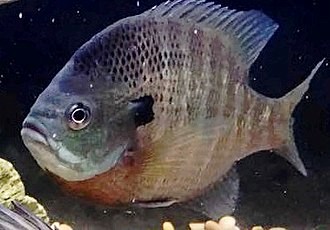
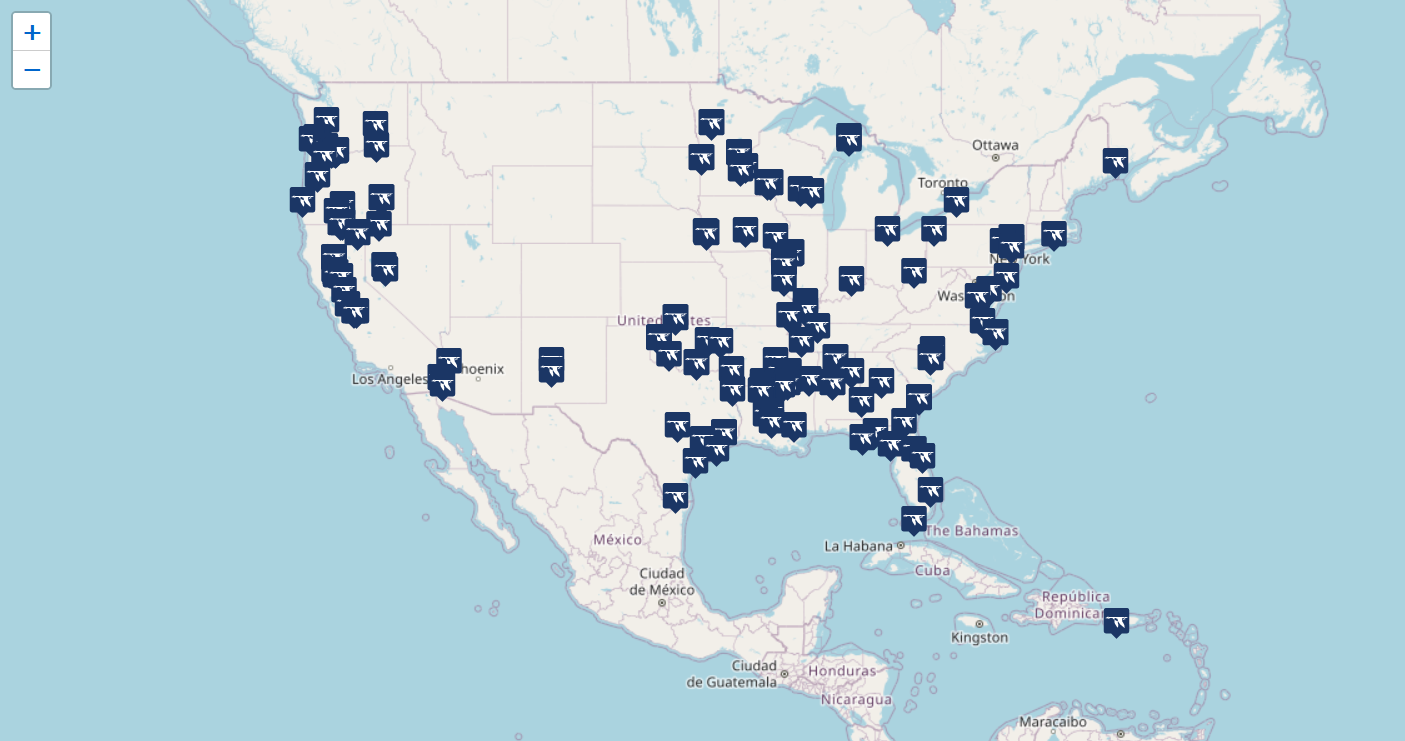
The bluegill, scientific name Lepomis macrochirus, is a fish native to Northern America, known for their widespread range and their species sub types. Due to their widespread nature, this fish has also been called names such as bream, brim, sunny, copper nose, or perch, despite not being a part of the perch family. Rather, as a part of the Lepomis family they are a true sunfish. Their range stretches from far northern sections of the US to Northern Mexico, and they have been found coast to coast, with an exception of the Rocky Mountains.
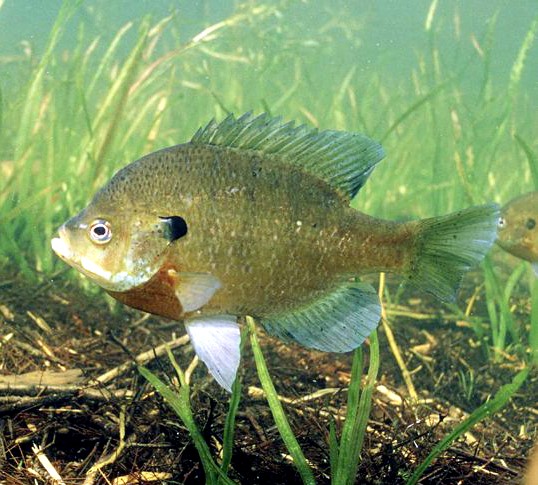
Bluegills live in freshwater environments, from lakes, ponds, rivers, creeks, and even some found in Chesapeake Bay, implying they can handle a salinity of up to 1.8%.but they prefer to live in swamps and other murky waters where they can't be easily seen. In their environment they are known for hiding in fallen trees and old stumps, and if there is a particular lack then they will spend much of their time in aquatic plants and water weeds. Their diet consists primarily of insects, eating insects that live along the water surface as juveniles, and preying mainly on insect larvae in adulthood. Prey is caught by sucking in water around it. This allows them to get to sizes as large as 16 inches, although most of them will remain 4-12 inches in length.
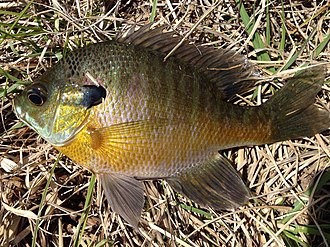
Breeding season takes place in the late summer, building nests and protecting them fiercely until the eggs hatch, at which point they will leave their children to fend for themselves. During their lifespan they are predated on by many other species, otters, larger sunfish, bass, trout, turtles, pike, perch, catfish. This is why they are a keystone species in their areas, and their reducing numbers is something to be worried about. However they have some adaptations to evade predation: primarily, they have the ability to swim backward, and turn their body at sharp angles. Swimming backward is done by producing a steady motion with the pectoral fins, and beating the dorsal and anal fins to make the backward motion. However, this backward motion is less steady than the forward motion, and can't be kept up for long periods. When startled, the fight or flight center of the fish allows them to turn their body in a sharp C motion, and then prepulse away from predators. This is called the C-start escape response, and allows the fish faster response times and a wider trajectory of movement.
Have a good Friday, everyone!